


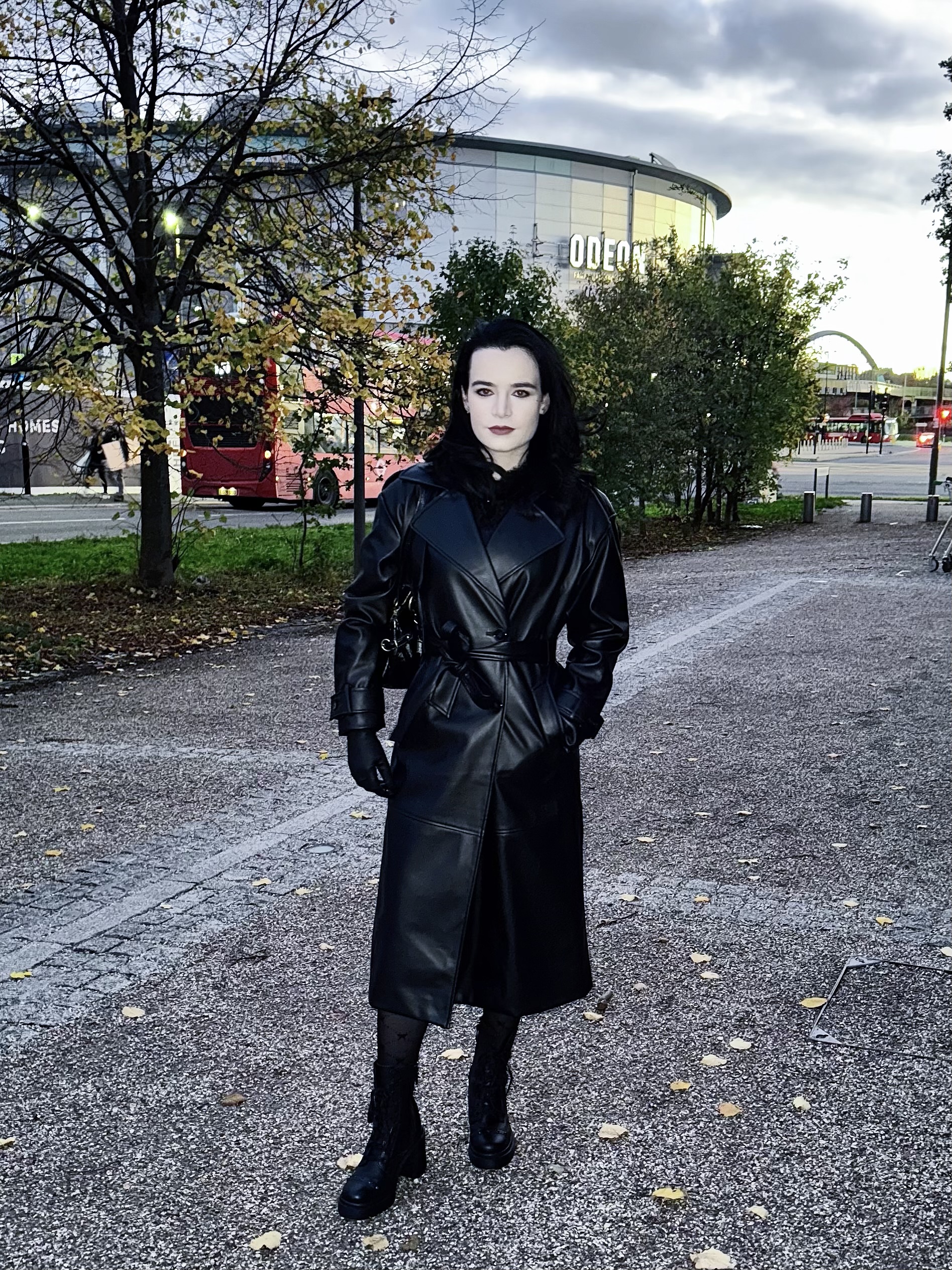
On a gloomy Monday afternoon in early November, I found myself listening to Sister of Night and reflecting on the long-anticipated Depeche Mode: M, the film I was lucky enough to see at the Greenwich Odeon the day before. This limited-screening film intertwines concert footage from the Memento Mori tour in Mexico with the country’s eclectic rituals surrounding death. Since their beginnings in 1980s Basildon, Depeche Mode have explored the tension between body and self, and the contradictions of life and loss, a pursuit evident in Black Celebration. These themes find new expression through Mexican culture’s embrace of mortality.
From the opening scene: an array of old Sony televisions glowing with fragments of concerts, vinyl sleeves, and obsolete technology, the film establishes both nostalgia and reverence for memory. The viewer is never narrated to; we are shown. Vibrant concert footage dissolves into ethereal vignettes of Day of the Dead rituals and monochrome, dreamlike anecdotes. The rhythm of performance mirrors the rhythm of prayer, revealing music’s power to resurrect memories and experiences while subtly bridging the duality between concert footage and cultural reflection.
Death is not an ending but an inevitable rhythm within life. In Mexico, death is celebrated, adorned, and sung to; for Depeche Mode, it is confronted, confessed, and amplified. M captures the meeting of these sensibilities: where a rock concert becomes a ritual of remembrance and connection. It is also worth noting Mexico’s turbulent relationship with rock concerts. After the 1971 Festival Rock y Ruedas de Avándaro, infamous for its public disorder, the Mexican government temporarily prohibited rock performances, especially by foreign acts. It was not until the early 1990s that such concerts were allowed and international artists slowly began to return. Watching M in light of this history amplifies the film’s theme of resurrection and the enduring power of music that serves as more than just a performance, but as an act of defiance and soundtrack to the survival and rebirth of an era.
The film transcends the boundaries of concert film or documentary. It meditates on how music itself functions as ritual: how the shared pulse of sound transforms loss into beauty, pain into presence. Without narration, the images breathe: concert lights flicker like candles, faces in the crowd merge with the stage’s glow, and we are left to draw our own connections between devotion, art, and impermanence.
In its closing moments, M reflects on legacy: the human body as a temporary vessel for creation that outlives flesh and bones. The Memento Mori tour, in both phrase and performance, reminds us that while bodies fade, creation endures. Depeche Mode: M is more than a tribute to music; it is an exploration of the sacred space where mortality and art meet. Through sound and memory, death itself becomes a form of resurrection, something we should acknowledge and accept. Rather than fear the inevitable ending, we are reminded that the beauty of life is rooted in its ephemeral nature.

 Logan Darkwoods